a field guide

Learning the names
of the ordinary flowers.

A short, illustrated field guide to eight of the flowers you're most likely to meet — in a garden, on a walk, on a windowsill. Each entry is written to be memorised: one photograph, one botanical name, one small handful of features to look for. Learn three a week and by the end of a season you'll be surprised what the road home has to say to you.

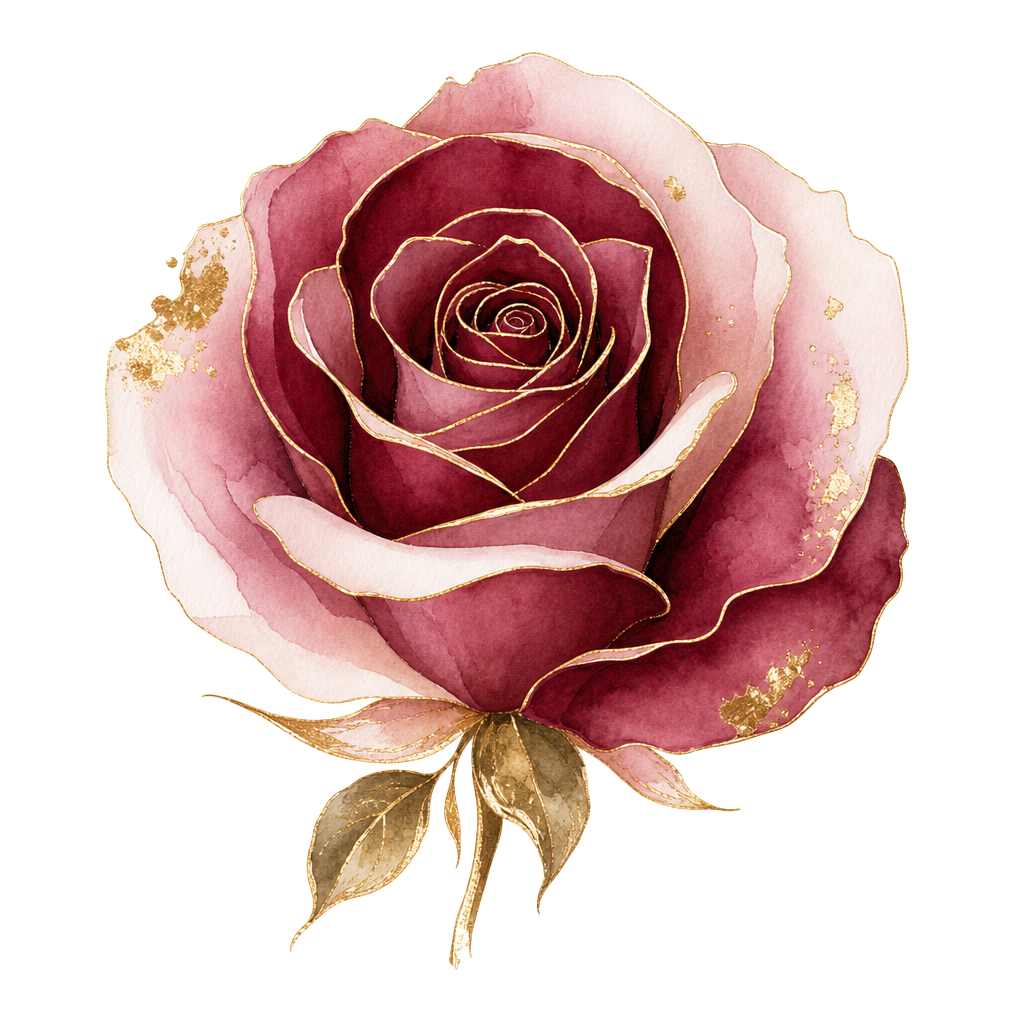
Rose

01 · Rosaceae

Rose

Rosa

Bloom
May – October
Height
30cm – 3m
Colour
White, pink, yellow, red, apricot
Meaning
Love, in every dialect.

How to spot it

  • Compound leaves with 5–7 serrated leaflets.
  • Stems bear paired prickles (never true thorns).
  • Cupped or flat blooms with layered petals in whorls of five.
  • Ripe hips redden in autumn — a reliable second identifier.
Peony

02 · Paeoniaceae

Peony

Paeonia lactiflora

Bloom
Late May – June
Height
60 – 90 cm
Colour
Blush, coral, cream, magenta
Meaning
A bashful happiness.

How to spot it

  • Round, ball-like buds that ants love (harmless).
  • Petals in dozens — 'bomb', 'double', or single forms.
  • Deep-cut, glossy leaves that redden in autumn.
  • Blooms once a year, briefly, gloriously.
Tulip

03 · Liliaceae

Tulip

Tulipa

Bloom
April – May
Height
20 – 60 cm
Colour
Almost anything except true blue
Meaning
A perfect, elegant love.

How to spot it

  • One flower per straight, single stem.
  • Six petals (technically 'tepals') forming a cup.
  • Broad, waxy grey-green leaves at the base.
  • Grown from a papery bulb; keep bulbs dry off-season.
Lily

04 · Liliaceae

Lily

Lilium

Bloom
June – August
Height
60 – 180 cm
Colour
White, pink, orange, deep red
Meaning
Purity, and a small return.

How to spot it

  • Trumpet-shaped flowers with six recurving petals.
  • Prominent stamens heavy with pollen (trim gently).
  • Whorled or scattered narrow leaves along the stem.
  • Fragrance is strongest at dusk.
Sunflower

05 · Asteraceae

Sunflower

Helianthus annuus

Bloom
July – September
Height
1 – 3 m
Colour
Golden yellow, russet, cream
Meaning
Adoration; the face that follows the light.

How to spot it

  • Composite bloom: a ring of ray florets around a disc.
  • Rough, sandpapery leaves on a hairy stem.
  • Young heads turn to follow the sun (heliotropism).
  • Seeds spiral in Fibonacci sequences — a botanist's party trick.
Lavender

06 · Lamiaceae

Lavender

Lavandula angustifolia

Bloom
June – August
Height
30 – 90 cm
Colour
Violet, mauve, occasionally white
Meaning
Devotion, and a quiet luck.

How to spot it

  • Slender square stems (a Lamiaceae signature).
  • Small tubular flowers stacked into a fragrant spike.
  • Grey-green, needle-like leaves that are silver in youth.
  • Loved by bees; almost impossible to kill in dry soil.
California Poppy

07 · Papaveraceae

California Poppy

Eschscholzia californica

Bloom
March – September
Height
20 – 40 cm
Colour
Saffron, gold, apricot
Meaning
Wild abundance; a golden hour.

How to spot it

  • Four silky, paper-thin petals shaped like a shallow cup.
  • Blue-grey, deeply divided, fern-like foliage.
  • Flowers close at night and on cloudy days.
  • Self-seeds enthusiastically — a gift to any dry bank.
Cherry Blossom

08 · Rosaceae

Cherry Blossom

Prunus serrulata

Bloom
Late March – April
Height
5 – 12 m (tree)
Colour
White, palest pink
Meaning
The beauty of an ending; a first breath of spring.

How to spot it

  • Five-petalled flowers in loose clusters along bare branches.
  • Serrated oval leaves emerge as the flowers fall.
  • Smooth grey bark with horizontal lenticel bands.
  • Full bloom lasts only 7 – 14 days — plan accordingly.

a small note

"The world is round and the place which may seem like the end may also be the beginning. A flower is small proof of that."

— from the field notebook